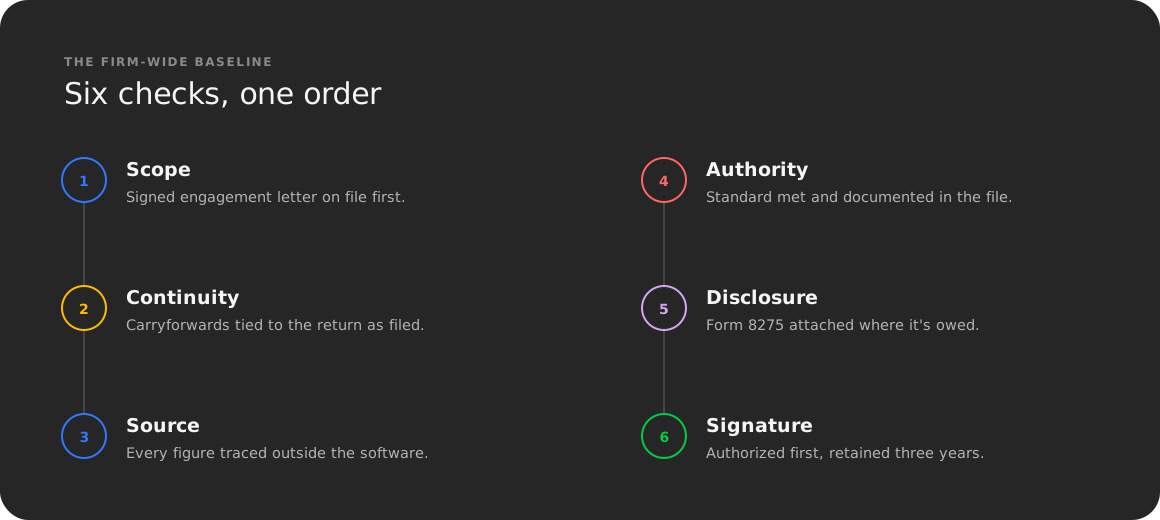
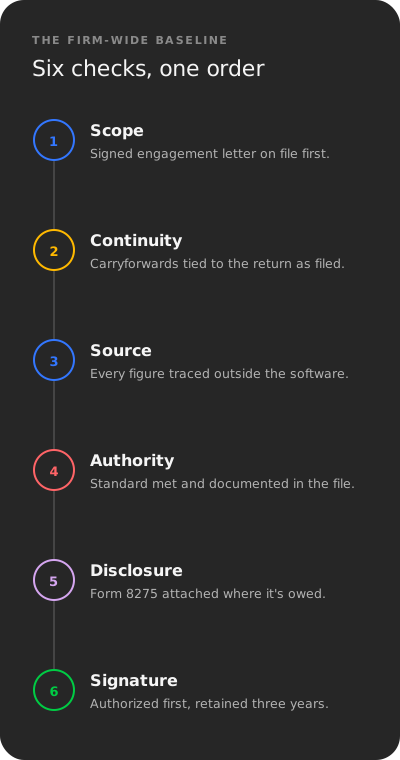
Before opening a single entity-specific schedule — whether reviewing a Form 1040, 1120-S, 990, or 1065 — six universal checks must be satisfied first. This baseline establishes the critical floor for compliance: scope, continuity, sourcing, authority, disclosure, and signatures. It stops right where entity-specific review begins, ensuring core risk management is locked in before diving into complex K-1 allocations or Section 199A calculations.
77%
Share of 2024 CPA malpractice claims that came from tax services, per the AICPA — before review even gets a chance to catch what preparation missed
Step 1 — Engagement scope
No engagement, no review. The AICPA is explicit: no work before a signed letter.
- Signed Engagement Letter: Verify a valid letter is on file for this specific client, return, and tax year.
- Scope Match: Confirm the letter covers everything preparation and review actually did.
- Out-of-Scope Work: Escalate and re-scope it in writing before signing off.
- Signing Authority: Confirm the letter names who's authorized to sign and transmit.
- Scope Changes: Require a client signature on every addendum — verbal doesn't count.
An engagement letter is a risk-management document as much as a client-service one. It is the first thing a malpractice claim tests, and a review that proceeds without confirming scope is reviewing against an assumption instead of an agreement.
Step 2 — Prior-year continuity
Every return opens where last year's closed — and nothing in current-year prep re-proves what carried forward.
- Carryforwards: Tie every balance, loss, credit, or basis figure to the return as filed.
- Accounting Method: Confirm it's unchanged, or that Form 3115 was filed.
- Prior-Year Adjustments: Confirm exam or amended-return changes were incorporated.
- Elections: Confirm none were inadvertently revoked or overridden by software.
- New Preparer: Treat inherited figures as unverified until traced to the filed return.
Step 3 — Agreement to source
Internally consistent isn't the same as sourced. Every figure has to trace to a document outside the tax software.
- Source Documents: Trace every income, deduction, and credit line outside the software.
- Trial Balance Basis: Confirm it's documented and matches how the return was prepared.
- Bank & Brokerage Totals: Confirm they agree with no unexplained plug.
- Related-Party Items: Trace to a supporting agreement, not just a ledger entry.
- Late Information Returns: Confirm corrected 1099s or late K-1s were incorporated.
Step 4 — Positions and authority
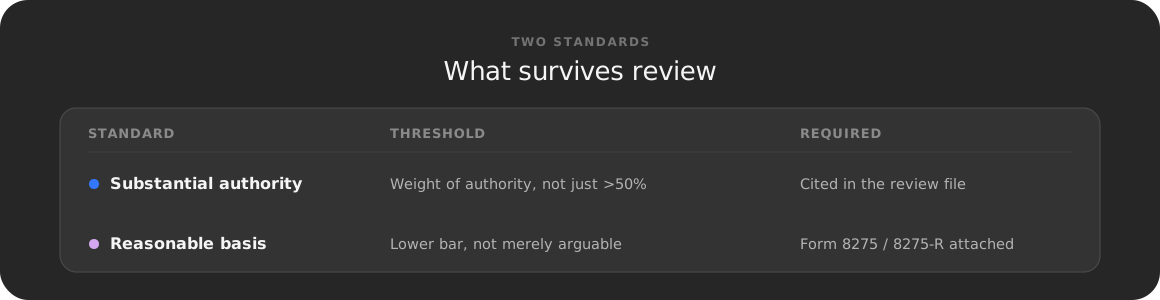
Arithmetic right isn't the same as defensible. Treas. Reg. § 1.6662-4(d)(2): substantial authority beats reasonable basis, and both beat a position that's merely arguable.
- Position Authority: Identify what supports each challengeable position and classify it.
- Below the Bar: Change the position, or flag it for disclosure.
- Reviewer's Call: Confirm the authority determination is the reviewer's own conclusion.
- Documentation: Confirm the file states which standard was met and why.
- Common Trigger: An aggressive Section 179 election claimed without full business-use documentation is a below-the-bar position on its face.
Circular 230 § 10.34(a) bars a practitioner from willfully, recklessly, or through gross incompetence signing a return that takes a position lacking a reasonable basis. This step is what generates the evidence that the standard was actually applied, not assumed.
Step 5 — Required disclosures
Reasonable basis without substantial authority still survives — if it's disclosed. Form 8275, or 8275-R against a regulation. Neither is optional.
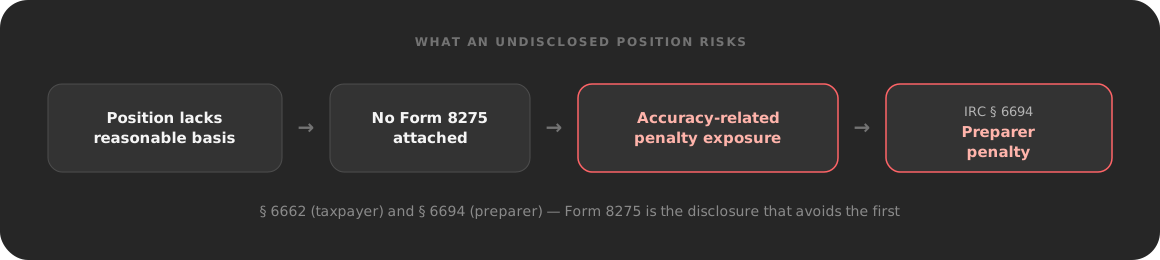
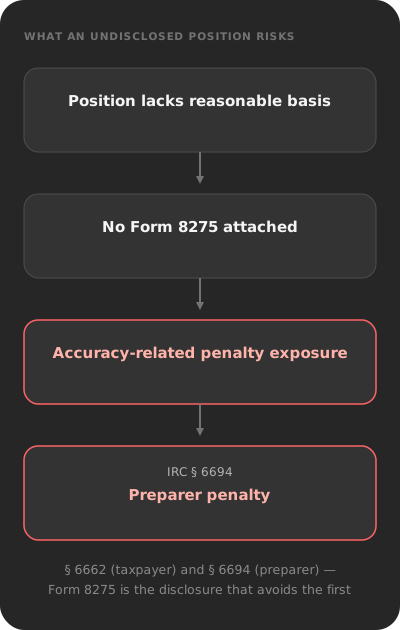
- Form 8275: Attach it — or 8275-R — for every disclosure-reliant position.
- Adequate Disclosure: Confirm the facts stated meet the standard; vague doesn't qualify.
- Form Check: Verify disclosure requirements against current instructions, not last year's.
- No-Disclosure Calls: Document the reasoning when authority was judged sufficient.
- Common Trigger: A disputed casualty-loss deduction with reasonable but not substantial support is exactly what Form 8275 exists for.
A position that needs Form 8275 to survive is not a position review can wave through on effort alone. The disclosure is the file's evidence, and it has to be attached, not just discussed in a review note.
Reviewer bottleneck?
See how Pernee keeps review notes and disclosure decisions attached to the return lines they explain, across CCH Axcess and GoSystem Tax RS.
Step 6 — E-file authorization and signature
A correct, sourced return still has to be authorized right. Publication 1345 governs it — and this is the step deadlines compress.
3 years
Retain signed Form 8879 / e-file authorizations from the filing date — IRS Publication 1345
- Return Copy: Confirm the taxpayer reviewed the actual return, not a summary, before signing.
- Sequencing: Confirm authorization is dated before transmission.
- Remote Signing: Confirm knowledge-based authentication (KBA) was completed and documented on the e-signature platform used.
- Version Match: Confirm the signed return is the exact version transmitted.
- State Forms: Confirm the state's own authorization is on file too — California, for example, requires FTB 8879 (individuals) or FTB 8453-C (corporations), separate from the federal form.
- Retention: Keep the signed authorization 3 years; confirm the signer had real authority.
Sequencing is not a formality: a return transmitted before it is authorized cannot be fixed by collecting the signature afterward. The record has to show authorization first, transmission second.
Where this checklist stops
These six are return-type-agnostic. The entity-specific layer — K-1 allocations, shareholder basis limits, public support tests — sits on top, tested only after these six hold. This is the floor, not the ceiling.
Where these checks actually break down
Every check above depends on something surviving to the next reviewer — a different person, a different season, sometimes a different firm. Pernee is the layer that keeps it: review notes, reasoning, and disclosure decisions attached to the return line across CCH Axcess, GoSystem Tax RS, SharePoint and Outlook, so these six checks aren't re-derived from scratch every filing season.
Keep this year's review conclusions where next year's reviewer will find them
See how Pernee attaches review notes to the return lines they explain, across CCH Axcess, GoSystem Tax RS, SharePoint and Outlook.