
Tax return review is the structured, independent examination a completed return receives before it is signed and filed — carried out by someone other than the person who prepared it. Firms describe their process differently and route it through a different number of people, but underneath the variation, every credible review answers the same five questions and exists to satisfy the same professional obligations. This guide is the map: what review checks, how the checks move through a firm, why the obligation is closer to mandatory than optional, and where the rest of Pernee's Tax Review cluster goes deeper on each piece.
The obligation behind it
No statute says a firm must run a review step by a particular name. The obligations that make review effectively mandatory sit in Circular 230 and the Internal Revenue Code, and they attach to the person who signs, not to a process a firm designs around them.
Circular 230 §10.22 requires a practitioner to exercise due diligence in preparing, approving and filing a return, and in determining the correctness of representations made to a client or to the IRS. Section 10.34(a) goes further: a practitioner may not willfully, recklessly or through gross incompetence sign a return that lacks a reasonable basis, or that takes an unreasonable position as described in IRC §6694(a)(2). IRC §6694 puts a number on getting that wrong — a penalty of the greater of $1,000 or 50 percent of the income derived from preparing the return for an unreasonable position, rising to the greater of $5,000 or 75 percent where the conduct is willful or reckless.
Circular 230 §10.22 also addresses relying on someone else's work: a practitioner is presumed to have exercised due diligence when reasonable care was used in engaging, training and supervising the person whose work they relied on. For a firm's own staff, that presumption turns specifically on training and review — which is the regulatory reason review exists as a distinct step rather than a courtesy the preparer extends to themselves.
Circular 230 §10.34(d) makes the parallel point about client information: a practitioner may generally rely in good faith, without independent verification, on information the client furnishes — but may not ignore inconsistencies or information that is incomplete on its face. AICPA's Statements on Standards for Tax Services, revised effective January 1, 2024, sit alongside these regulations and added standards addressing data protection and reliance on tools — an acknowledgement that the sourcing behind a return, not just its arithmetic, is something the standards now speak to directly.
The five checks every review answers
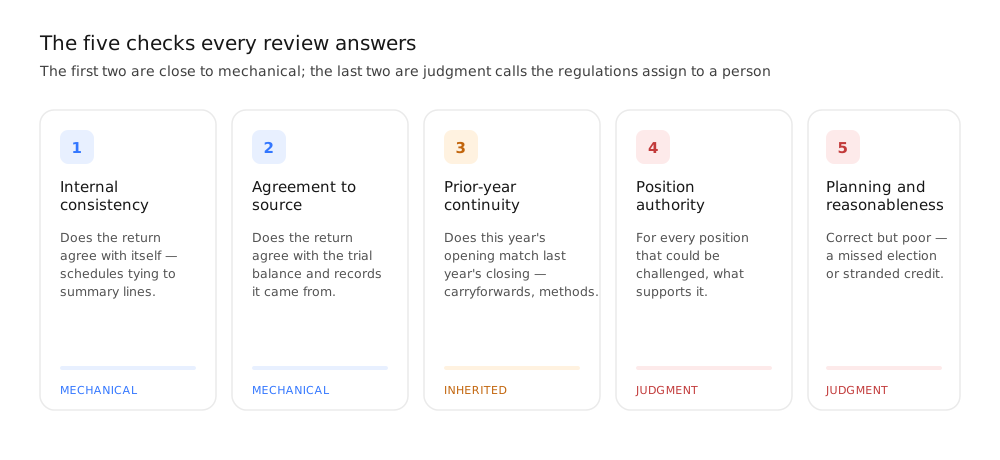
A reviewer works backward from a completed return to the positions it takes, asking what each one depends on and whether that dependency holds. That's a different task from preparation, and it clusters into five checks that behave very differently from each other — which matters, because they don't automate the same way and they don't fail the same way.
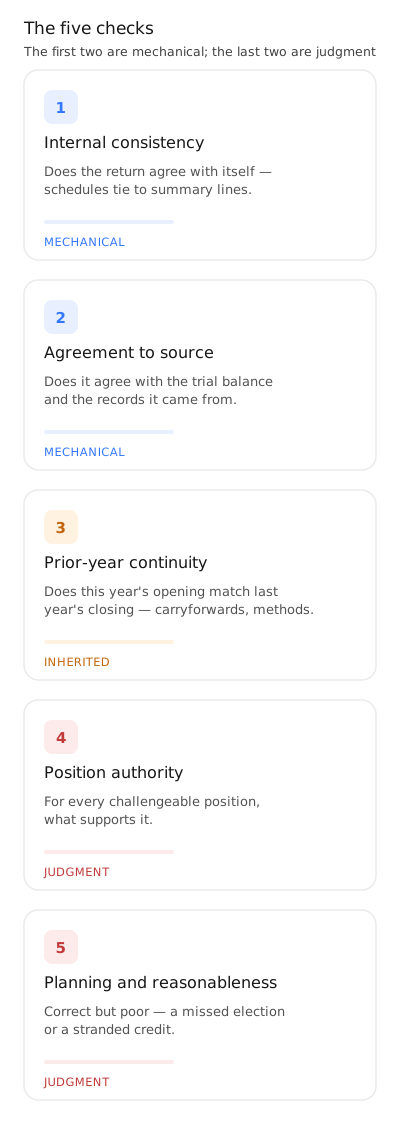
- Internal consistency: does the return agree with itself — schedule totals tying to summary lines, allocations summing to the total, a balance sheet that balances.
- Agreement to source: does the return agree with the records it came from — the trial balance, the information returns received, the underlying statements.
- Continuity with prior years: does this year's opening position match last year's closing position, and are the methods the same — carryforwards, elections in force, accounting methods.
- Authority behind each position: for every position that could be challenged, what supports it, and does that support meet the standard the position requires.
- Planning and reasonableness: is the return correct but poor — a technically accurate return can still miss an election or strand a credit.
The first two are close to mechanical: comparing numbers within a document, and comparing a document against a source. The third is mechanical in form but only as good as what was recorded the year before — a carryforward is inherited, not derived, and nothing in the current year re-proves it. The fourth and fifth are judgment calls the regulations assign to the practitioner who signs, which is exactly why they're the two that don't get faster just because a firm adds more software.
The multi-tier review model
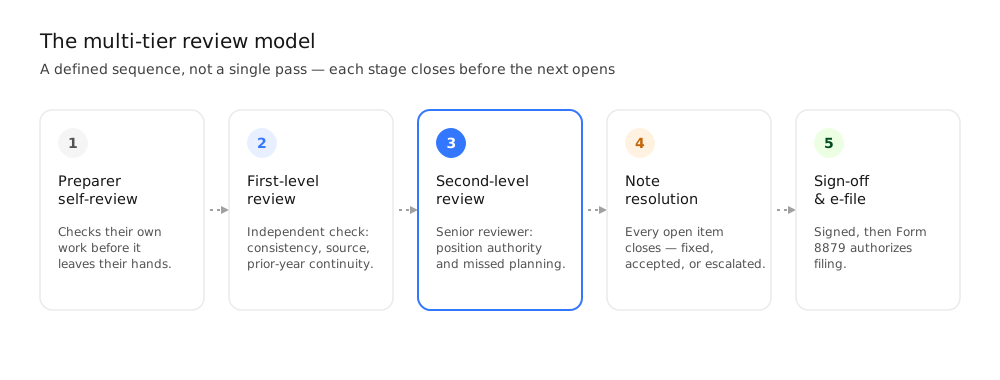
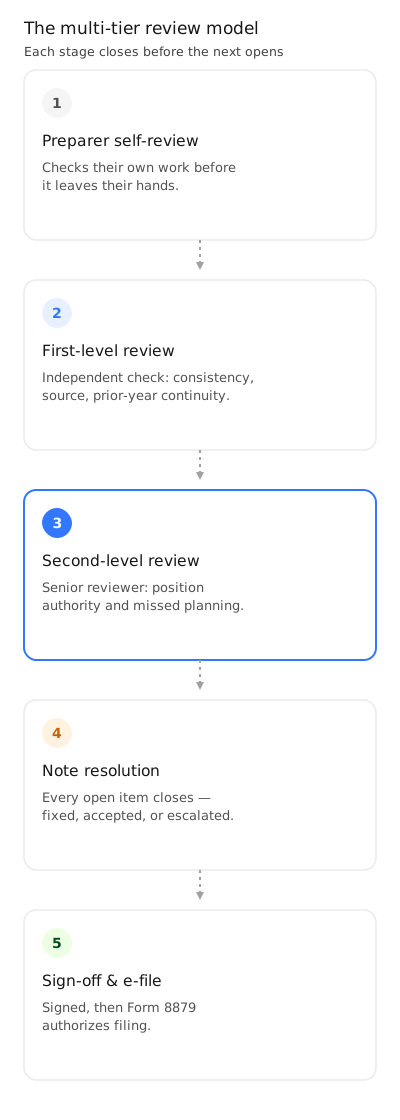
Most firms run review through a defined sequence rather than a single look, because the obligation to demonstrate due diligence is easier to meet with defined stages than with one good read at the end. The stages are consistent across firms even where the titles differ.
- Preparer self-review — before a return leaves the preparer's hands, they check their own work for mechanical errors.
- First-level (detail) review — an independent reviewer checks internal consistency, agreement to source, and prior-year continuity.
- Second-level (technical or partner) review — for returns above a firm-set complexity or risk threshold, a senior reviewer examines the authority behind each position and looks for missed planning.
- Resolving review notes — every open item closes before the return moves forward: fixed, accepted with a documented reason, or escalated.
- Sign-off and e-file authorization — the return is signed, and for e-filed individual returns using the Practitioner PIN method, the taxpayer authorizes transmission on Form 8879, the IRS's e-file signature authorization.
A review note that only confirms a number is correct has answered a smaller question than the one the reviewer was actually asked.
$5,000 or 75%
The IRC §6694(b) penalty floor for a willful or reckless understatement — the greater of the two, and it lands on the person who signed
Where the model actually breaks
The stages that fail in practice are rarely preparation or first-level review — those are the most mechanical and the best supported by existing software. What breaks is resolving review notes and the continuity check inside first-level review, because both depend on information that lived in someone's memory, an email thread, or a prior-year workpaper nobody indexed.
A review note resolved by a conversation and never written down has to be re-litigated next year by whoever happens to be reviewing the file then. A continuity check that depends on the same reviewer remembering why a method was chosen breaks the moment that reviewer takes on a different book of clients. Neither failure shows up as a wrong number this year — it shows up as the same open question getting asked again next season, which is a knowledge-management problem wearing a tax-review costume.
What's in this guide
This page is the hub for Pernee's Tax Review cluster — the questions this guide answers at a summary level, each supporting article answers in depth. The full set below will link here and to each other as they publish.
Where Pernee fits
Every one of the failure modes above is the same shape: a conclusion someone reached lives in a place the next person to need it can't reach — a memory, an email, a workpaper filed and forgotten. Pernee is a review-and-memory layer that keeps review notes, the reasoning behind them, and the return line they explain attached to each other across the tools a firm already runs, so next year's reviewer asking a question this guide answers gets it from the file instead of from whoever happens to remember.
Keep review conclusions attached to the returns they explain
See how Pernee carries this year's review notes into next year's review, across your firm's existing tools.